


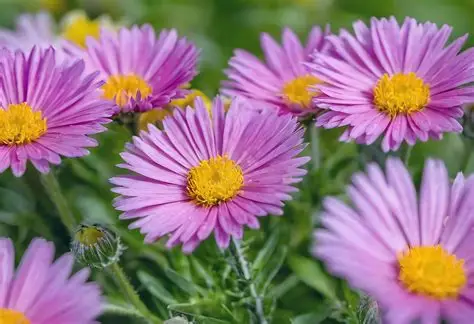
Lilac and blue are probably the most dazzling of the vast range available, glowing incredible hues beneath the grey skies and sit perfectly with autumn’s golden grasses.
The soft-pink forms provide warmth when the weather begins to cool but there are also darker shades of pink and purple, as well as white.
Asters can add longevitiy to the garden, blooming over a long period, sometimes from August into November, providing bees, and butterflies with nectar.
Asters are also commonly known as Michaelmas dasies, named after the Since the feast of Archangel Michael in late September.
When planting, if possible, choose an open site in full sun, in neutral to alkaline soil. Many forms will bloom well in semi-shade.
Ensure the soil is well-drained, fertile, and moisture retentive by adding organic matter before planting.
Asters can also be grown in containers if you have limited space or if you’re on acid soil (asters prefer neutral to alkaline earth). Ensure that drainage is good by mixing compost with grit and by sitting the planter on pot feet.

Author: Jonny
Author of Gardening Life!