



My immediate reaction was “well, 30,000 flies can’t be wrong” but as the week progressed stories and myths came to light about two other creatures – cats and goats!
In February 1960 – in our resort of Agadir, just off the coast in the Atlantic Ocean – an earthquake of 5.9, on the Richter scale lasting just 15 seconds, killed between 12,000 and 15,000 people and rendered 35,000 residents homeless.
The moderate quake and shallow depth lead to widespread devastation with the hospital and new hotels reduced to rubble. The origin of the quake was a fault line in the Atlas Mountains, known as the Kasbah fault, with survivors being pulled from the wreckage up to 12 days after the disaster. King Mohammed V visited and pledged to rebuild Agadir. I am pleased to say he kept to his promise and the only evidence on my visit was a tale told by residents about the cats, of which there are many roaming the street, fed by residents.
According to the tale, all the cats in Agadir vanished a couple of days before the earthquake and did not return until a few days after.
With my usual due diligence, I checked the story in various Moroccan newspaper and travel articles who confirmed the story whilst locals said they believed that cats had sensitivity to changes about to happen and this helped many residents survive as buildings collapsed.
Other anecdotal reports say many animals acted strangely prior to the quake with donkeys breaking free from their restraints and stray dogs following their feline friends out of the town. Such stories are common after seismic events in many countries and across centuries.
Whether the Agadir legend is true or not, the residents of the town treat the city’s cats extremely well, believing their furry friends are their early warning system, should such a quake strike again.
Another story I was keen to follow was the one about goats climbing trees to feed on leaves!
Today the sight of goats climbing Argan trees is a tourist attraction but they not only eat leaves but the fruit which ripens around June. The goats have a craving for the bitter taste from the fruit and have been known to climb over 20 feet to reach the food. More research revealed that, when the goats digest the fruit, they spit out or excrete the hard inner nut which helps new Argan trees grow.
Argan oil is used in the culinary trade, as well as cosmetics where it is a powerful moisturiser deeply hydrating dry and mature skin.
For centuries, the indigenous Berber people used the oil to treat skin conditions and reduce the pain caused by arthritis and, coincidently, an excursion to a Berber tribe was the next stop for me and my best friend.
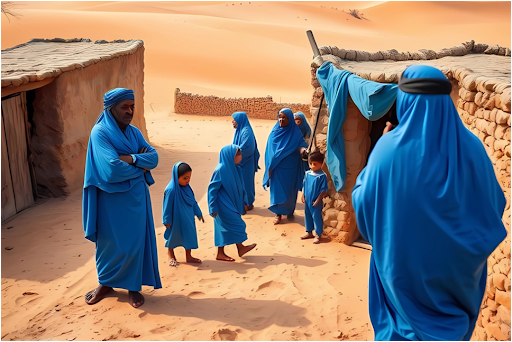
One Berber group, the Tuareg people, are known as “The Blue Men of the Sahara” which originates from their tradition of wearing indigo robes and veils which can permanently stain their skin bluish.
We had been told about this before going up into the Atlas Mountains and were also given the heads up about taking a sandwich and can of drink as we may not wish to participate in a typical Berber feast which could include a sheep’s head complete with bulging eyes! That was poetic licence from our travel guide and, although the Berbers see hospitality as a sacred duty, we were welcomed with mint tea, which we had tried in a traditional Moroccan market called “souks”.
The ritual of cleansing hands is observed before the meal followed by a variety of dishes including Harira, a soup, and Bastilla, a flaky pastry pie, filled with shredded pigeon or chicken.
I do not recall actively participating in the feast but seem to recall a spit-roasted whole lamb basted in butter and spices and certainly not a sheep’s head with or without eyes being present.
The feast concluded with almond pastries and more refreshing mint tea.
Finally we visited a typical souk. That tested my negotiation skills with an Arab trader who would haggle about the price while serving even more mint tea. Our travel guide offered a few clues and suggested haggling was seen as a friendly social ritual and not an aggressive battle with the key words being Bshwiya meaning “little by little”. You are always greeted with a smile and a warm greeting “salam alaykum” and then some small talk before the vendor gives the price he wants. It is high at first but never give your preferred price first.
Start low enough to give yourself wiggle room without insulting the vendor – say maybe 50% of his asking price. It’s a slow process but if you can’t agree walk, away and maybe come back later. The vendor will call you back with a better offer but by being friendly and polite (and breaking the habit of a lifetime) I was able to secure a good deal on a leather jacket for my best friend but rejected the idea of swopping her for 30 camels – the humped back animal and not the famous cigarette!
All too soon our holiday in Morocco ended but, unlike the cats of Agadir, I did not heed the warning signs and, on our return to the UK, my best friend and I went on our separate ways to new adventures.
But new friends did enter my life again – especially in the Canary Islands.

Author: John
Author of Around The World In 80 Years