


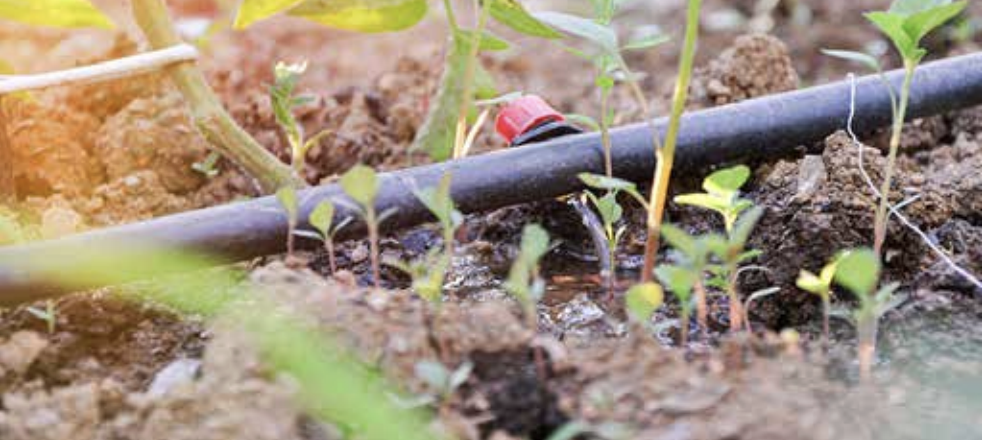
This could be as simple as using a water butt and watering can, but when we think about irrigation, we tend to mean an automatic or semi-automatic system like sprinklers or drip hoses to help deliver water to your garden landscaping.
Deciding whether garden irrigation is a good option for you therefore comes down to the size of your garden, the scale of your planting, and whether you can find the right type of garden irrigation that suits your purpose.
A good garden irrigation system should be able to deliver just the right amount of water to plants and lawns, so that the ground stays moist but not wet. Ideally, it should save time and effort and help maintain the health of your garden.
The three most common methods of garden irrigation are hand watering, garden sprinklers and an automatic garden irrigation system.
For small gardens hand watering is common as it can be done quickly and easily using a garden hose, however, for larger gardens you may decide to install an automatic system of pipes that will save time and energy by regularly
Drip pipes and hoses release water slowly at specific points. A soaker hose works in a similar way, but instead of having specific watering points, the whole hose is porous, so water slowly leaks out along the length and into the ground.
Spray and sprinkler systems will throw water out to hydrate a specific area of garden. Sprinklers can be mounted on fixed rods or on pop-up mechanisms that can be buried in the ground. They can be connected to an outdoor tap or water butts.
You can also design your garden with a system of channels and pools to irrigate your garden.
One of the benefits of garden irrigation systems means that the water is directed to exactly where it needs to be, helping to halt the spread of weeds.
Watering by hand or with a hose means that you’re watering plants from above. Irrigation systems water the soil directly meaning that less water is evaporated or blocked by the leaves of your plants.
Some more advanced garden irrigation systems have timers, making them ideal for busy homeowners that may not have time to water their gardens regularly.
If you have plants and edibles with differing needs, you might find a drip-hose kit more useful. You can usually adapt and add to these, to customise your set up and many come with adjustable drippers and flow controls, so you can make sure your plants are getting the right amount of water.
For small gardens a mechanical irrigation system may be more trouble than it’s worth and you may find that five minutes watering by hand every day will be enough to sustain the growth of your plants and keep them healthy.
Though some irrigation systems are subtle, you may not like the appearance of all the extra tubes running through your garden.
Also, depending on where your water source, the hoses may present a trip hazard as they reach your plants.
The type of irrigation that’s best for your garden also depends on ground conditions, your local climate and what you’re growing. If your garden tends to suffer from boggy patches, you may benefit from using a system of channels and pools to redistribute the excess rain and groundwater to the rest of your garden.
If your garden is largely lawn and the soil is well-draining, then you may benefit from a sprinkler system. This should stop your lawn drying out in the summer and saves you time getting the hose out.
For those with lots of flower beds and veg patches, you may find a drip or soaker hose is best. If your plants’ watering needs are all fairly similar, then a soaker hose system is a good option for providing an even distribution of water.
Depending on your plants’ needs, you might find a drip-hose kit more useful. You can usually adapt and add to these, to customise your setup and many come with adjustable drippers and flow controls, so you can make sure your plants are getting the right amount of water.

Author: Jonny
Author of Gardening Life!