


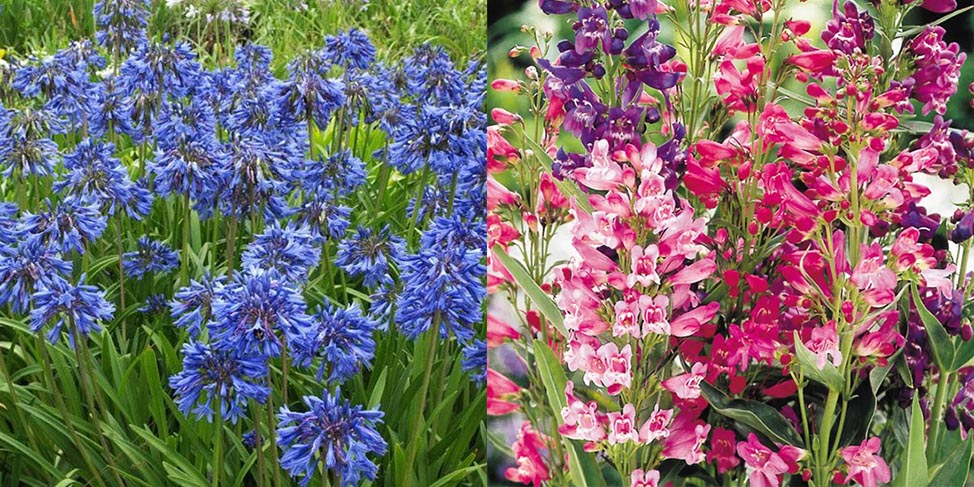
On the plus side Agapanthus ‘Blue Triumphator’, pictured, and penstemon ‘Andenken an Friedrich Hahn’ are some of the hardiest available, so if you’ve struggled to overwintering other varieties outside, it’s really worth giving these a go.
Agapanthus like plenty of moisture when in active growth so pay particular attention to newly establish plants in their first summer.
If you garden on heavy soil, such as clay, try growing them in pots of loam-based compost (John Innes No.2), placing them in the border when in flower then over-wintering them in the shelter of an unheated greenhouse, or wrapping them in fleece.
Container-grown agapanthus need dividing every three or four years, but don’t bury too deeply or plant in too large a pot.
Deadhead penstemons before winter, but only cut them back once they’re re-growing away at the end of April or early May – the top growth offers winter protection. If you buy new plants late summer, overwinter them in a cold frame or unheated greenhouse and plant out next spring.
MOST anemones are modest little plants that flower in early spring. Japanese anemones are very different.
Tall, elegant and vigorous enough to take over large areas of your garden if you don’t keep a keen eye on them, they produce large white or pink flower from late summer onwards and are just coming into flower in my garden.
Like their smaller, earlier cousins they grow happily in shade, including dry shade. ‘Honorine Jobert’ is an elegant white cultivar with a egg-yolk yellow centre and doesn’t spread quite as quickly as the pink varieties. Both will prosper pretty much anywhere except waterlogged soil.

Author: Jonny
Author of Gardening Life!