

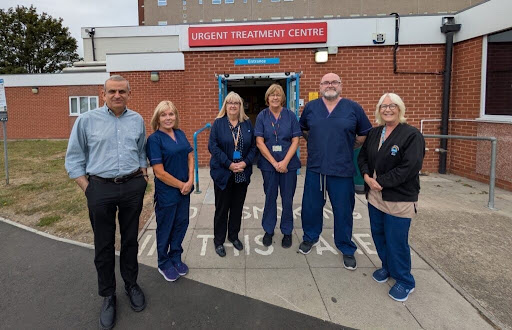
The work at the Urgent and Emergency Care service at the University Hospital of North Tees – which cares for Hartlepool patients – is being used by NHS England’s “Getting It Right First Time” initiative as a case study in its national guidance.
The service was created using a model that has since been adopted by many other services of its type across the country including the University Hospital of Hartlepool..
Patients arrive at the service, either by themselves or by ambulance, and are helped at the front door first by a pre-registration streamer.
An experienced specialist nurse, known as an Urgent Care Practitioner, then makes a clinical streaming decision – whether the patient has a minor illness or injury which should be treated in the urgent treatment centre – or if the issue is more serious and will need treatment in the emergency department next door.
If the patient can be treated in the Urgent Treatment Centre, they are then cared for by a GP or a nurse practitioner.
The model was set up in 2017 jointly by the hospital trust, the Hartlepool and Stockton Health GP federation and the North East Ambulance Service.
Kevin Moore, Urgent and Emergency Care consultant, said: “This was set up because we knew this was the right thing to do for patients. Before then, patients were coming to emergency care when they would be more appropriately cared for in a service for minor injuries and illnesses. The Urgent and Emergency Care service, which runs side by side at the front of the hospital, allows us to quickly and effectively stream patients to the right service for them.”
He added: “As a result, we have consistently been among the top five organisations in all of the national benchmarks including the four-hour standard which sets a target of a maximum four hour wait in urgent and emergency care from arrival to being admitted to a hospital ward, transferred or discharged out of our care. Its success has not only been down to the fantastic work of the teams in the service but also the wider workforce across the organisation – ensuring patients are brought into the department and then given further care in hospital and in our community services quickly.”
