


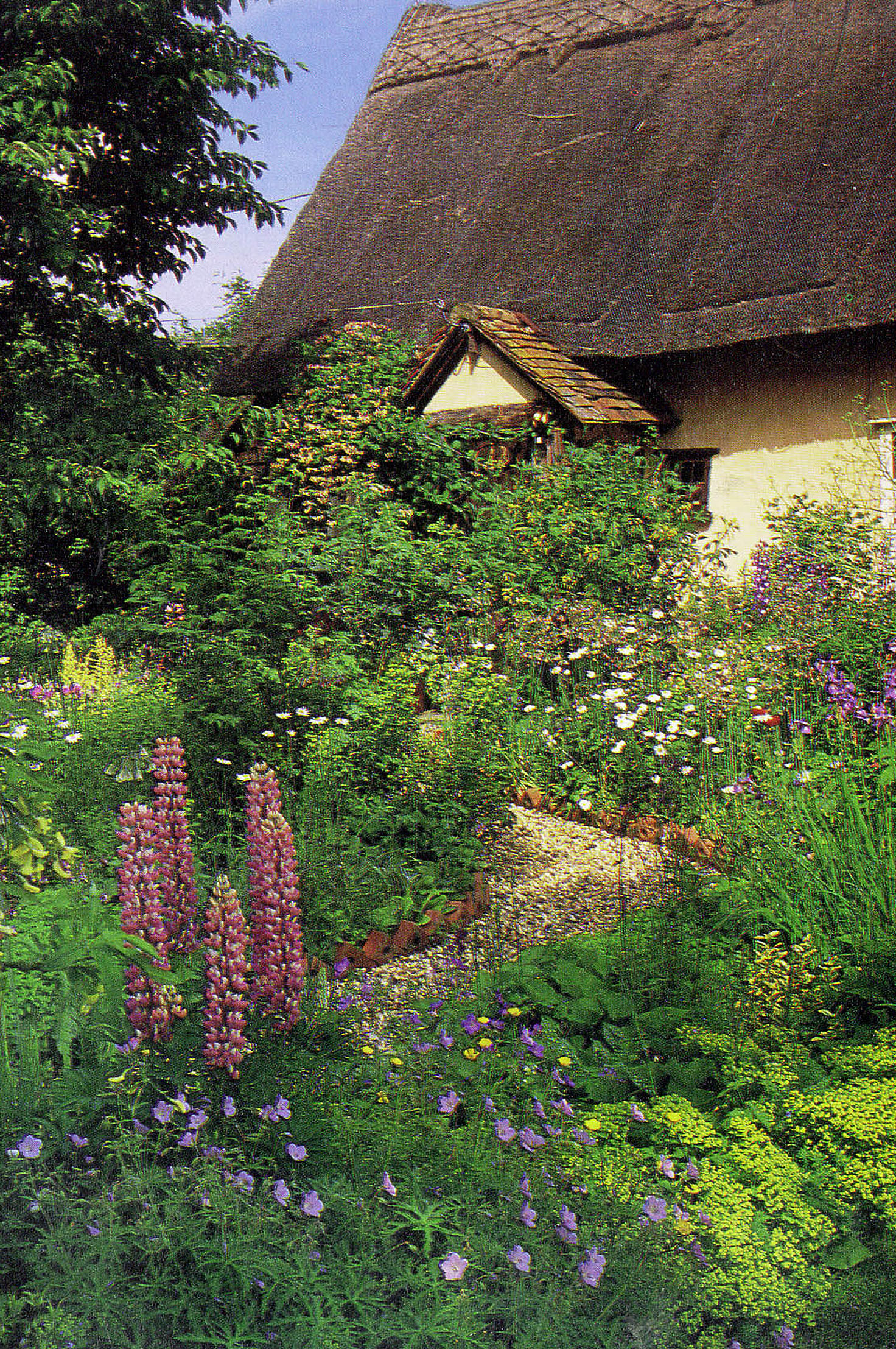
But how do you create a cottage garden, making sure the landscape looks natural, and what types of plants should you choose?
Creating a natural, informal but colourful look requires a lot of planning, as you must try to include plants which brighten up the border in the difficult months as well as in summer.
So make sure you include some winter-flowering shrubs or berry-producing plants to bring a splash of colour in the gloomy months.
We all know the rules about putting tall plants at the back and shorter ones at the front of your border, but cottage gardens are an exception.
It’s important to create a series of views through to taller specimens and make sure you vary the height of plants at the front to keep the eye interested.
While you want to give a feel of informality, sometimes a more stunning display is achieved by roughly grouping colours.
Why not keep your hot hues such as reds, oranges and golds in one spot and contrast them with a cooler area of blues and creams, using plenty of varying foliage to soften things up.
Light grey or white variegated leaves help to break up colours, while toning in well with the hot reds and the cool pastel blues.
Trellises, arches and obelisks also go some way to achieving the look you want, as climbing plants like roses or honeysuckle can be arranged to give a warm welcome to visitors.
A strategically placed wigwam or other support structure can also be used to train a plant to achieve extra height where it is needed.
The watchword for the cottage garden is simplicity. If you want to add containers, use old wooden half barrels or something else which looks old and natural.
As for plants, tall ones at the back of the border are important as they act as the anchors for the rest of the garden.
They may include Hollyhocks, which come in a huge variety of colours from pale pink and salmon to almost black, producing wonderful flower spikes above rounded leaves and growing to around 8ft.
Other tall specimens ideal for a cottage garden include Sunflowers, Foxgloves, Japanese anemones and Monkshood – although this is poisonous, so if you have children you might omit this.
If you have a frame you want to use for climbers at the back, Sweet Peas provide weeks of scented bloom.
Should you want a scented corner, why not use a climbing rose mixed with a really fragrant honeysuckle such as Lonicera periclymenum ‘Serotina’, which blooms for a few weeks from mid-June.
Mid-height cottage garden plants which provide wonderful bursts of colour and different shapes include lupins, poppies and helleborus.
The reliable Cornflower will give you cool blue tones and the red hot poker will be great for the warm section of the garden, giving you a mass of tubular flowers in orange, red and yellow above tufts of grassy leaves.
Most of the smaller plants will take up the front of the border, although they can fill spaces between the taller plants and provide yet more colour to the border.
Good choices include wild primroses, wild geranium or cranesbill, which is a truly fantastic ground cover but don’t let it become too invasive.
Mimulus has soft shiny foliage and a mat-forming habit – although slugs love it, so take precautions – and low-growing Anemones like A. blanda are ideal for carpeting below taller plants, viola and old-fashioned pinks.
These are just a few of the traditional choices made by cottage gardeners far and wide, but there are a wealth of alternatives out there – you just have to use your imagination.

Author: Jonny
Author of Gardening Life!